

Answers, Solutions & Peace of Mind.
Ranked Top 1% of Psychologists Specializing in Treating…
Did you know?
According to the National Institute of Health, approximately 6.8% of Americans will experience Post-Traumatic Stress Disorder (PTSD) at some point in their lives. Among Veterans, the rate rises to 7% by the time they leave military service — contributing to a heartbreaking 17 suicides per day among former service members.

Panic Attacks and Panic Disorder
When panic strikes, it can feel terrifying.
Many people mistake a panic attack for a heart attack or fear they’re about to die. The sudden rush of fear and loss of control can leave you feeling shaken and exhausted.
Common Signs & Symptoms:
Rapid or pounding heartbeat
Tightness or pain in the chest
Shortness of breath or feeling unable to breathe deeply
Dizziness or lightheadedness
Numbness, tingling, or chills
Sudden fear of losing control or “going crazy”
Feeling detached from yourself or your surroundings
Persistent worry about having another attack
You’re not alone.
Panic attacks are your body’s alarm system going into overdrive, as if your brain’s accelerator is pressed to the floor while the brake isn’t working. With the right support and tools, you can learn to calm your body, retrain your mind, and put that brake back in place.
There is relief.
Did you know?
According to the National Institute of Health (NIH), about 4.7% of people will be diagnosed with Panic Disorder, and nearly 11% will experience at least one panic attack in their lifetime.

PTSD for Veterans & Civilians
PTSD can affect anyone.
It can develop after a traumatic event such as a car accident, combat exposure, divorce, serious illness, or even major life transitions. Some people are simply more sensitive to trauma, making them more vulnerable to ongoing symptoms.
Common Signs & Symptoms:
Intrusive or distressing memories of a traumatic event
Nightmares or flashbacks
Avoidance of people, places, or activities tied to the trauma
Feelings of detachment or mistrust toward others
Persistent fear, anxiety, or hypervigilance
Irritability or sudden anger outbursts
Difficulty maintaining relationships
Loss of interest in hobbies or social activities
There is hope.
PTSD is treatable — and healing is possible. Eye Movement Desensitization and Reprocessing (E.M.D.R.) Therapy is a proven, effective approach for both Veterans and civilians.
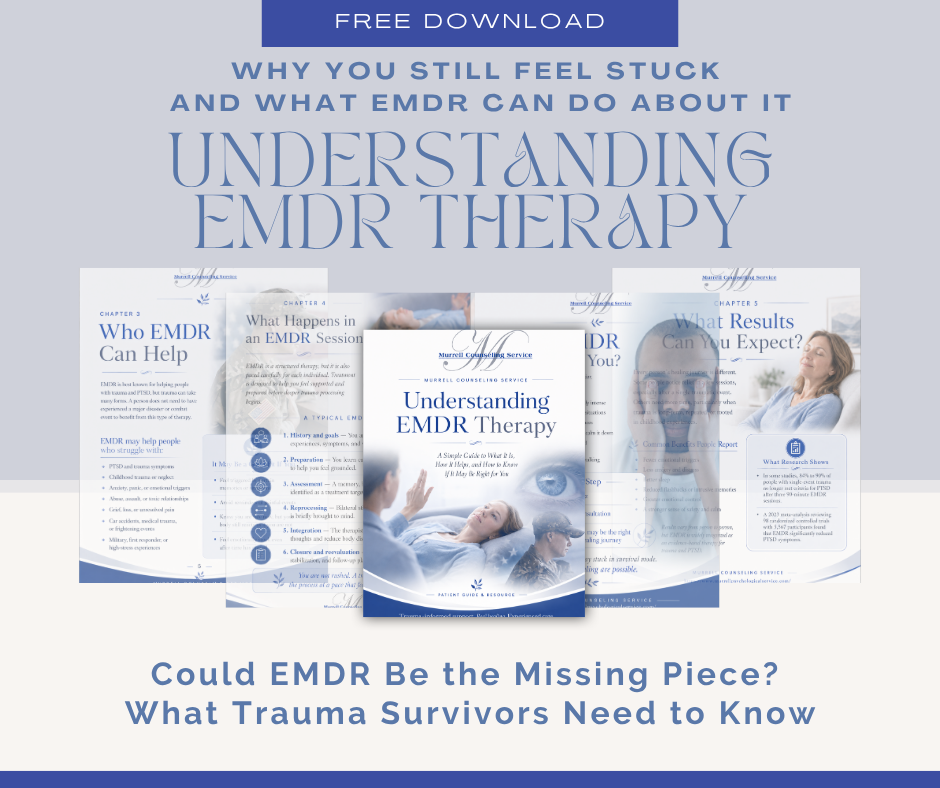
Download your Free eBook, Understanding EMDR Therapy, to learn all about EMDR.
Generalized Anxiety Disorder
Anxiety can show up in many ways.
It’s more than just feeling stressed. When anxiety becomes constant or overwhelming, it can interfere with daily life, relationships, and your ability to focus or relax. Many people live with persistent worry without realizing it’s treatable.
Common Signs & Symptoms:
Racing thoughts or constant “what if” thinking
Feeling restless, tense, or on edge
Trouble concentrating or feeling your mind go blank
Irritability or a short temper
Muscle tension, headaches, or stomach upset
Difficulty falling or staying asleep
Fatigue, even after a full night’s rest
Avoidance of situations that trigger worry
Anxiety doesn’t have to control your life.
With the right tools, you can calm your thoughts, ease physical tension, and restore a sense of balance.
Did you know?
Anxiety disorders are the most common mental health condition in the U.S., affecting more than 40 million adults each year — nearly 1 in 5 people, according to the Anxiety & Depression Association of America (ADAA).

Find Out if You Suffer From PTSD or Anxiety With a Free, Quick & Confidential Quiz.
Get your score instantly!
Disclaimer: This information is for educational purposes only and does not constitute medical or psychological advice. Always consult a qualified healthcare professional for diagnosis and treatment.
John was a young, home health physical therapist who was initially very successful in his profession. However, in his second year of work, he developed disabling panic attacks whenever he drove more than a block away from his home. His panic symptoms were severe chest pains, breathing difficulty, and the feeling that he was about to die. After only ten E.M.D.R. sessions, his Panic Disorder was resolved. Complex PTSD is more difficult to treat.
For example, Mary joined the Navy in order to serve her country. There she married a fellow sailor, and then bad things began to happen to Mary. Her husband turned out to be a brutally abusive psychopath. Her daughter was killed and then Mary was gang raped. Eventually, she married a genuinely nice man. However, she still suffered panic attacks, nightmares, suicidal thoughts. She was admitted to a psych ward, barely able to speak or think. She had thirty-two shock therapy treatments before she was referred to me. After twenty-three sessions of EMDR therapy, Mary is now stable, happily married, and now enjoys making quilts for her family. Her Complex PTSD symptoms are completely resolved.
To learn about EMDR, go to http://www.EMDRIA.org.